
The Most Significant Innovations in Human History
Fire to CRISPR: a tour through the innovations that reshaped civilisation - from the mastery of fire to artificial intelligence, with every breakthrough in between.

Human civilization is the cumulative result of a series of breakthrough innovations that fundamentally expanded what humanity could do: how we survive, communicate, move, think, and shape the world around us.
Pre-Modern Foundations
Fire


The mastery of fire was humanity's first great technological leap - enabling cooking, warmth, protection, and social gathering.
Why it matters
- Cooking made food safer and easier to digest
- Protection from predators
- Warmth in colder climates - enabled migration to diverse environments
Agriculture


The Neolithic Revolution - the shift from foraging to farming - is arguably the single most important transition in human history.
Why it matters
- Permanent settlements and population growth
- Surplus food → division of labor and specialization
- Emergence of cities and complex societies
Domestication of Animals


Turning wild animals into livestock transformed food supply, transportation, labor, and warfare.
Why it matters
- Enabled pastoral economies
- Provided meat, milk, wool, leather
- Led to animal-powered transport and farming
Often paired with agriculture as the foundation of civilization.
The Wheel


The wheel revolutionized transportation, manufacturing, and warfare - a cornerstone of mechanical engineering.
Why it matters
- Efficient movement of goods
- Pottery wheels and agricultural machinery
- Military chariots and early engineering
Writing


Writing enabled the permanent storage of knowledge - transforming governance, science, culture, and commerce.
Why it matters
- Record keeping, laws, and governance
- Literature and cultural transmission
- Knowledge passed across generations
Mathematics


Mathematics is the universal language underlying all engineering, science, and computation.
Why it matters
- Engineering and architecture
- Navigation and astronomy
- Modern computing and algorithms
Metallurgy (Bronze & Iron Working)


Learning to extract and shape metal radically improved tools, weapons, and infrastructure.
Why it matters
- Stronger agricultural tools
- Large-scale warfare capability
- Trade networks based on metals
This innovation defines entire historical eras: the Bronze Age and the Iron Age.
The Compass


Navigation technology that made long-distance exploration and global trade possible.
Why it matters
- Age of Exploration
- Global trade networks
- Colonial expansion and globalization
The Printing Press


Gutenberg's movable type press was the information revolution of the 15th century.
Why it matters
- Mass literacy and spread of scientific ideas
- The Renaissance and Enlightenment
- Democratization of knowledge
Scientific Revolution & Early Modern Era
The Scientific Method
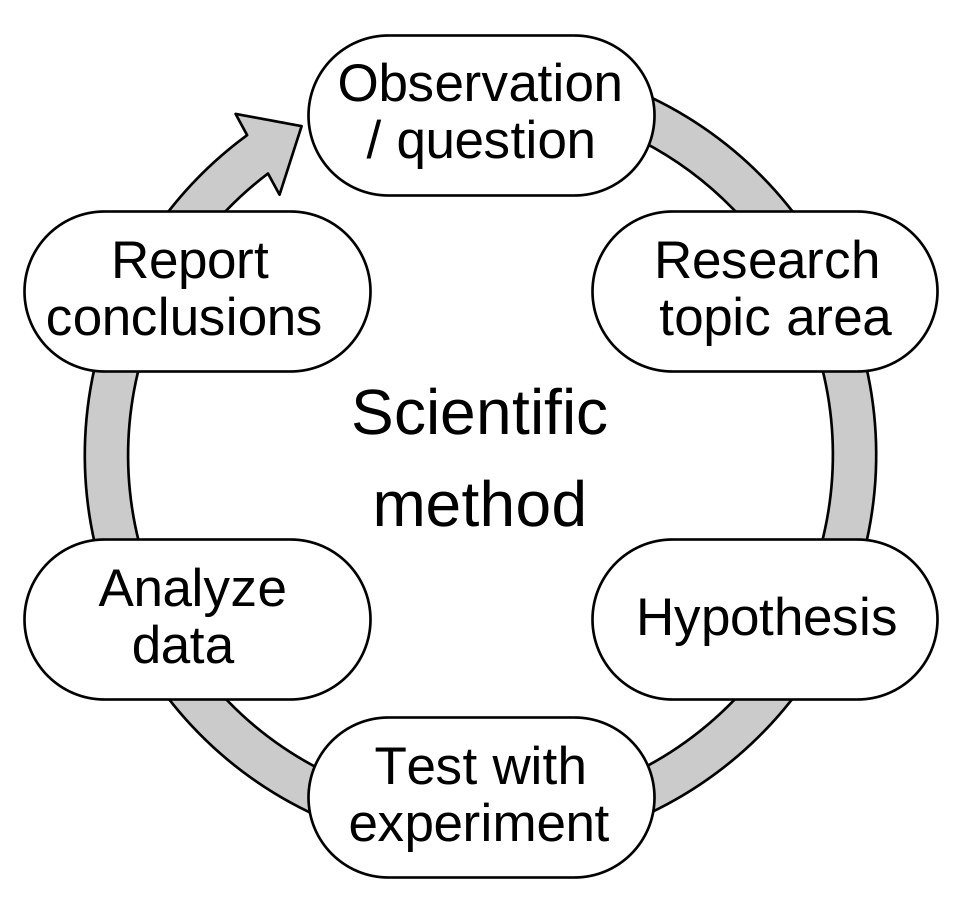


A method for generating knowledge, not a physical invention - but arguably one of the most powerful innovations ever.
Why it matters
- Systematic discovery
- Foundation of modern science
- Accelerated technological progress
Vaccination


One of the most important medical innovations in history.
Why it matters
- Eradication of smallpox
- Dramatic increases in life expectancy
- Foundation of modern public health
Industrial & Modern Era Innovations
The Steam Engine


The engine that powered the Industrial Revolution and reshaped human civilization.
Why it matters
- Mechanized factories
- Railways and steamships
- Urbanization and industrial-scale production
Internal Combustion Engine

.webp&w=828&q=75)

The engine behind modern transportation.
Why it matters
- Cars and trucks
- Aviation development
- Global logistics and supply chains
Electricity


Harnessing electrical energy transformed every aspect of modern life.
Why it matters
- Lighting, appliances, and telecommunications
- Industrial machinery
- Foundation for all digital electronics
Refrigeration
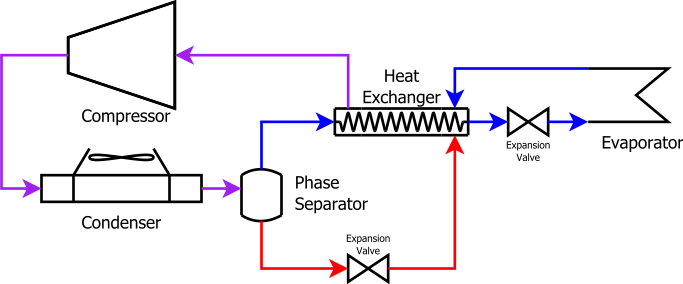


Quietly one of the most transformative technologies.
Why it matters
- Global food supply chains
- Urbanization
- Reduced foodborne illness
Telephone


Real-time voice communication at a distance - the foundation for modern telecommunications.
Why it matters
- Business coordination and emergency services
- Social connectivity
- Foundation for modern telecom networks
Flight


From Kitty Hawk to intercontinental travel in a single century.
Why it matters
- International travel and global tourism
- Rapid cargo transportation
- Military and geopolitical power
Transistor


The building block of all modern electronics.
Why it matters
- Microchips
- Personal computers
- Smartphones
- Modern digital world
Without it, the computer and internet revolution wouldn't exist.
Computers


From room-sized machines to pocket devices - computers transformed every human endeavor.
Why it matters
- Automation of calculations and data processing
- Software and digital systems
- Artificial intelligence foundations
Nuclear Energy


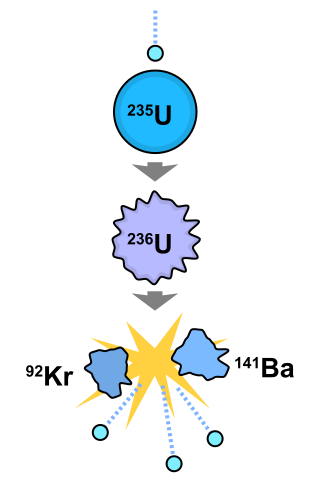
Harnessing atomic energy changed geopolitics and energy systems.
Why it matters
- Massive energy density
- Nuclear weapons
- Long-term debates about energy policy
The Internet


The most powerful communication and commerce platform ever created.
Why it matters
- Instant global communication
- E-commerce and social networks
- Knowledge sharing at planetary scale
Satellites


Satellites underpin much of the modern world.
Why it matters
- GPS navigation
- Global telecommunications
- Weather forecasting
- Earth observation
Digital & Biotech Era
Human Genome Sequencing

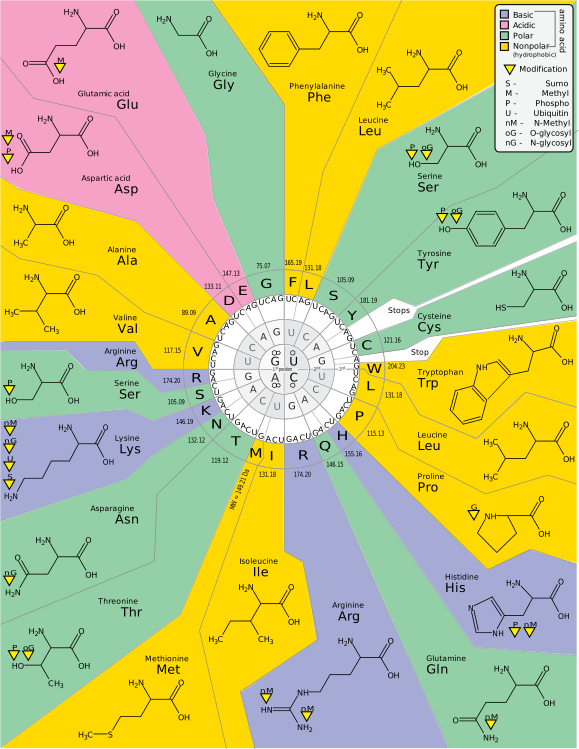

Mapping the human genome opened the door to personalized medicine and biotechnology.
Why it matters
- Personalized medicine and genetic disease diagnosis
- Biotechnology innovation
- New understanding of evolution
Space Travel



From the Moon landing to plans for Mars - space travel expands the frontier of human civilization.
Why it matters
- Scientific discovery and planetary exploration
- Satellite infrastructure
- Long-term potential for off-planet civilization
Artificial Intelligence


AI may become one of the most consequential innovations ever.
Why it matters
- Automation of knowledge work
- Scientific discovery acceleration
- Economic restructuring
CRISPR Gene Editing


A revolutionary capability to edit DNA with precision.
Why it matters
- Cure genetic diseases
- Engineer crops
- Synthetic biology
Where next?
Across thousands of years, a relatively small number of breakthroughs have fundamentally reshaped human civilization. These innovations expanded our ability to:
- Harness energy - fire, steam, electricity, nuclear
- Move across the planet - wheel, compass, engine, flight
- Communicate and share knowledge - writing, printing, telephone, internet
- Compute and reason - mathematics, transistor, computers, AI
- Understand and manipulate life itself - vaccination, genome, CRISPR
As we said earlier, human civilization is the cumulative result of a series of breakthrough innovations that fundamentally expanded what humanity could do. We are arguably today going through the most significant era of innovation in history with new advances weekly in materials science, medicine, quantum computing, artificial intelligence and more, with learnings compounding on learnings. Who can say how we will communicate, move, think, and shape the world around us in ten years time?
What a time to be alive 🤗
This post is intended as complementary to an earlier post Standing on the Shoulders of Giants.
Related:
- Visualise the last 100 years of innovation
- The Periodic Table of Innovation
Stay in the Loop
Get the latest innovation methods, tips & updates delivered straight to your inbox.